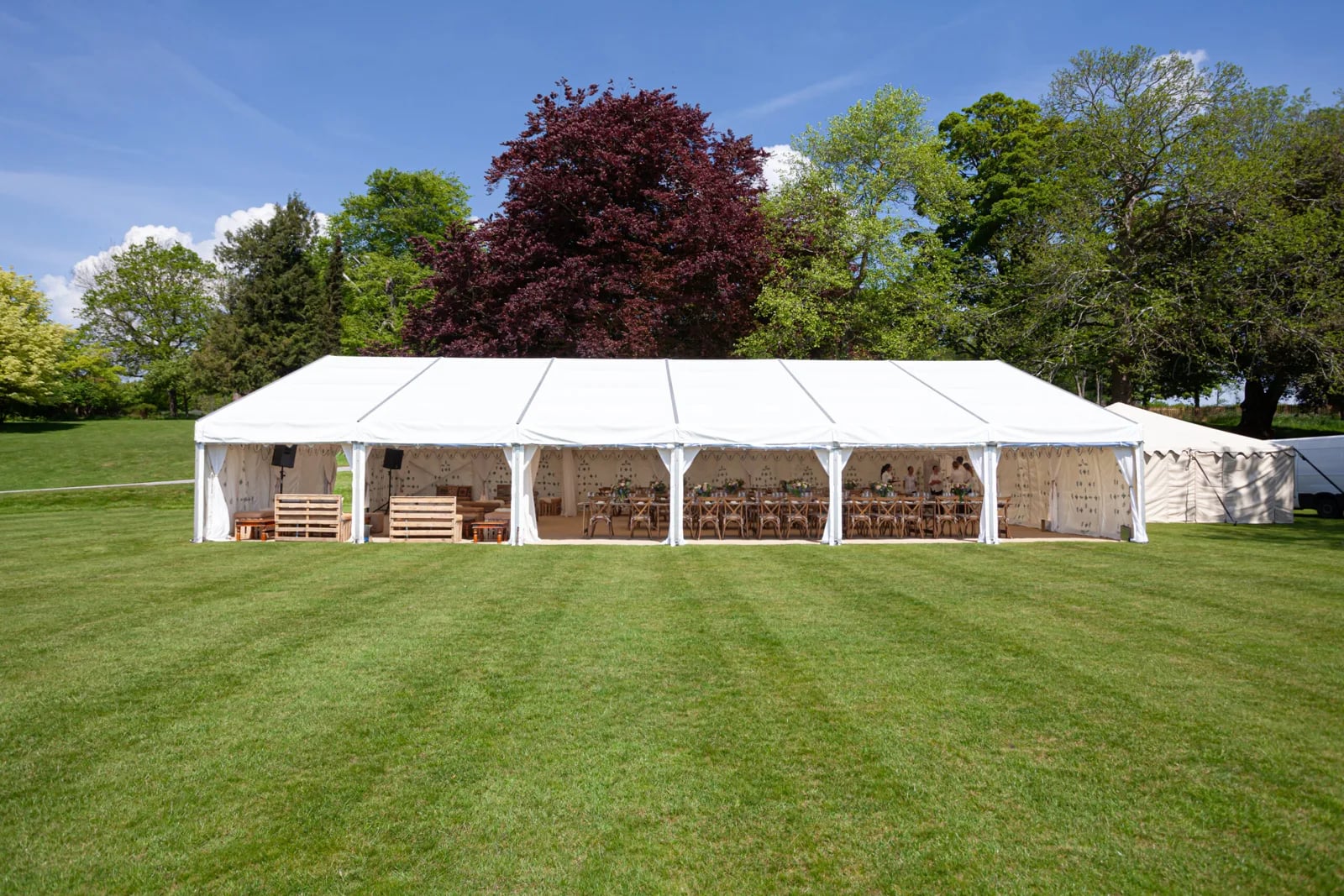
Summer events are one of the things marquees do best. Open sides, beautiful surroundings and long evenings make them perfect for weddings, parties and celebrations. But when temperatures begin to rise, keeping guests comfortable becomes an important part of planning the event.
From 2027, we are introducing air-conditioning and cooling options for our marquees, giving our clients greater control over the temperature inside their space during warmer weather.
Just like heating a marquee in winter, cooling isn't simply a case of adding an air-conditioning unit. The size of the marquee, number of guests, style of roof and even the time of day can all affect how much cooling is required.
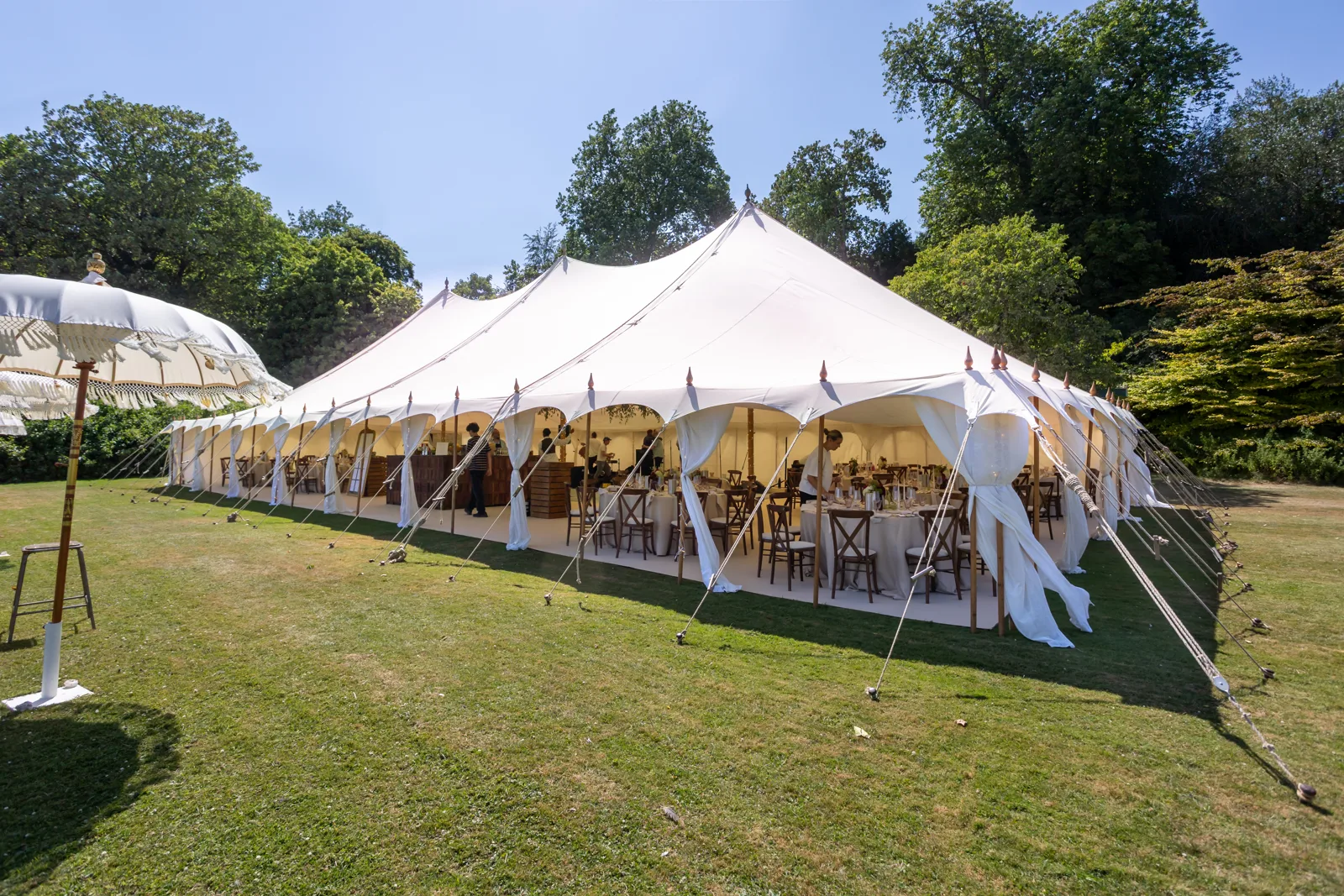
Why Do Marquees Get Hot?
Marquees respond to changes in outdoor conditions more quickly than many permanent buildings. On a warm summer day, heat can enter through the roof and walls, while guests, lighting, catering and electrical equipment generate additional heat inside.
This means the temperature inside isn't determined by the weather alone. The position of the marquee, amount of sunshine throughout the day, roof and wall configuration and how the space is being used all contribute.
Understanding these factors allows us to plan how heat can be reduced, removed or managed throughout an event.
The Physics Behind Keeping a Marquee Cool
One of the main factors is solar radiation. When sunlight reaches a marquee, energy is absorbed by the structure and by surfaces such as flooring, furniture and tables, which then release heat into the surrounding space. Different roof and wall configurations interact with sunlight differently, so this forms part of the cooling calculation for each individual marquee.
Airflow is equally important. Warm air is less dense and naturally rises towards the highest point of the marquee. Good circulation helps prevent this warm air from building up and distributes cooler air throughout the space. Depending on the conditions, this can be achieved through natural ventilation, fans or mechanical cooling.
There is also evaporative cooling, where water absorbs heat from the surrounding air as it evaporates. Evaporative cooling equipment uses this principle to lower the temperature of incoming air before circulating it through a space. Its effectiveness varies according to temperature and humidity, so it is one of several cooling methods that can be considered.
Together, sunlight, airflow, outside temperature and the heat generated inside create what is known as the cooling load, essentially, the amount of heat that needs to be removed to keep the marquee comfortable.
Encouraging natural airflow
Sometimes the simplest way to manage temperature is through good ventilation.
Opening opposite sides of the marquee can create cross-ventilation. Air enters from one side and travels through the structure before leaving from the other, helping to replace warmer internal air with outside air.
Warm air also naturally rises towards the highest point of a marquee. Giving this warmer air somewhere to escape can help prevent heat building up towards the roof, particularly when combined with good airflow at a lower level.
Of course, ventilation always needs to be considered alongside the weather conditions and the safe configuration of the marquee. On particularly hot or still days, natural airflow may not be enough, which is where mechanical cooling can help.
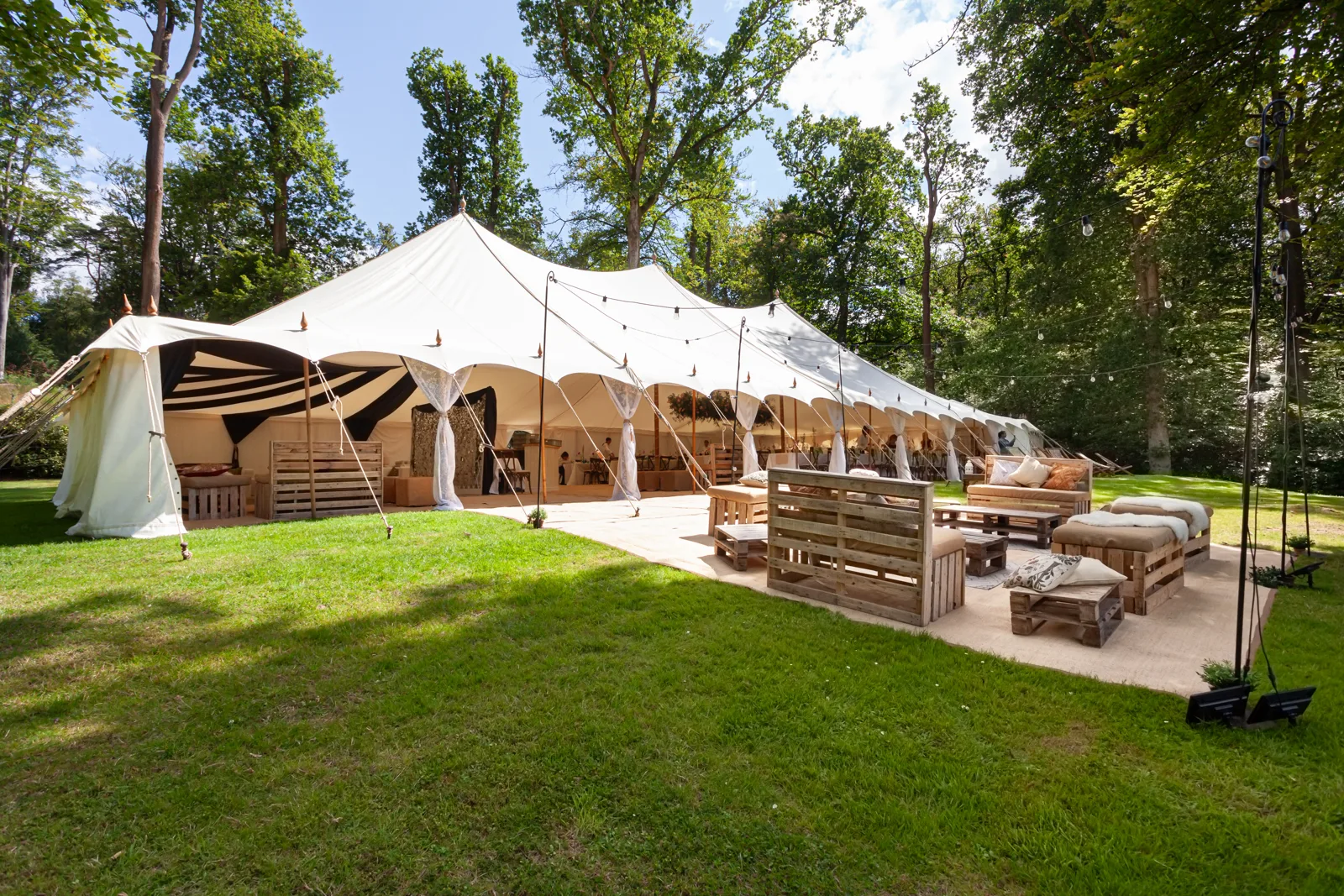
Using the Site to Our Advantage
Where a marquee is positioned can also affect how warm it becomes throughout the day.
The direction of the sun, surrounding buildings, trees and natural airflow can all influence the conditions inside. These are factors we can consider when planning the position and layout of the marquee.
The sun also moves throughout the day. An area that is shaded in the morning may receive direct sunlight later in the afternoon. Understanding how the site changes throughout the day can therefore help us plan for warmer conditions.
This is one of the reasons why site visits are so important. They allow us to look at the environment surrounding the marquee as well as the structure itself.
What Temperature Should a Marquee Be?
For summer events, a comfortable target inside a marquee is around 23–25°C. However, temperature isn't the only factor. Humidity, sunlight and airflow all affect how warm a space feels.
If it reaches 30°C outside, bringing the marquee down to around 23–25°C can make a noticeable difference. The hotter it becomes outside, the more cooling will be required to maintain this temperature.
It is also important to measure the temperature inside the marquee. Sunlight, guests, lighting and equipment all generate heat, so the internal temperature can be different from the temperature outside.
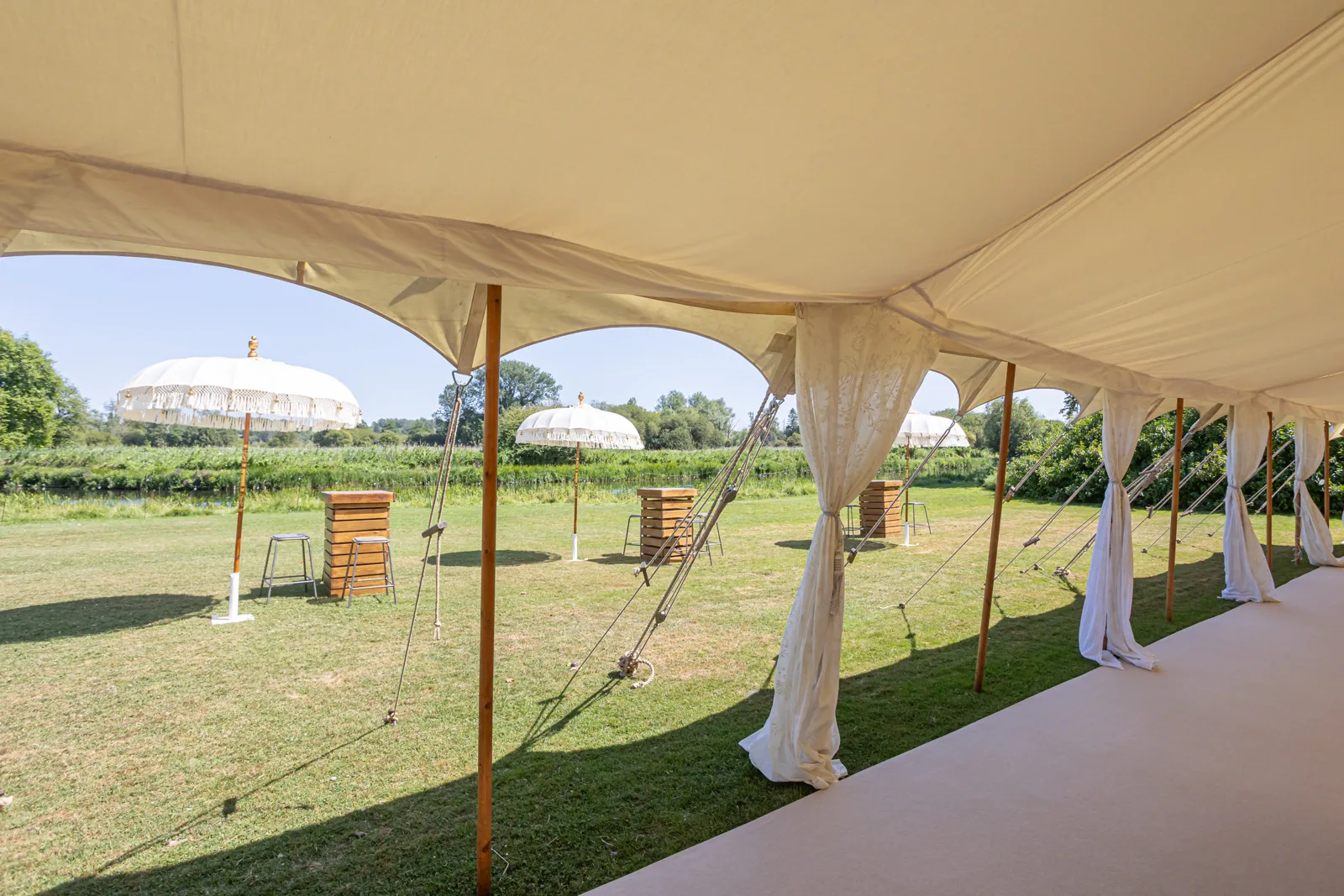
How Many Fans Will We Need?
The number of fans we use will depend on the size of the marquee, the number of guests and the weather on the day.
For example, a 6m × 12m marquee may need around 2 fans. A 9m × 18m marquee may need 3–4, while a larger 12m × 24m marquee may need around 4–6.
Where we position them is just as important. We spread fans around the marquee to keep air moving throughout the space and avoid warmer areas developing.
Fans can make a space feel around 2°C cooler by increasing the movement of air around guests. However, they don't actually lower the temperature inside the marquee.
On particularly hot days, we may therefore recommend air conditioning as well. This actively removes heat from the marquee rather than simply moving the air around.
These numbers are a guide. Every event is different, so we will always consider the marquee, guest numbers and expected weather when planning the cooling.
Air conditioning for Marquees
From 2027, we will be introducing air conditioning as part of our summer marquee options, providing greater control over the internal temperature during periods of warmer weather.
Unlike fans, which create air movement, air conditioning actively removes heat from the space. This allows the temperature inside the marquee to be managed more effectively as conditions change throughout the day.
The cooling equipment is positioned outside the marquee, with cooled air distributed into the structure through discreet ducting. This keeps the main equipment away from guests while allowing cool air to circulate throughout the space.
For summer events, an internal temperature of around 23–25°C provides a comfortable environment for guests. When outside temperatures reach 30°C or above, controlled cooling can make a significant difference over the course of an event.
Air conditioning is most effective when the marquee is reasonably enclosed. However, natural ventilation and open sides can still form part of the event, with cooling introduced as and when conditions require it.
By considering air conditioning from the early planning stages, we can account for the marquee design, guest numbers, layout and expected conditions. This allows cooling to be incorporated practically and discreetly without compromising the overall design of the space.
How many Air Conditioning Units will I need?
The size of the marquee gives us a useful starting point for deciding how many air-conditioning units will be needed.
As a guide, a 6m × 12m marquee or a 12m × 12m marquee can typically be cooled using one commercial air-conditioning unit.
For larger structures, such as a 12m × 18m or 12m × 24m marquee, two units can be used. Positioning the units at different points also helps distribute cooled air more evenly throughout the space.
The temperature inside and outside will also influence how hard the system needs to work. Guest numbers, dancing, lighting and catering equipment can all generate additional heat inside the marquee.
These factors will be considered when planning the position and operation of the units, helping to maintain a comfortable temperature throughout the event.
Where Does the Air Conditioning Unit Go?
The next consideration is how the equipment is incorporated without affecting the appearance of the marquee.
The main air-conditioning units can be positioned outside, usually behind the marquee or within a service area. Flexible ducting then carries the cooled air into the structure.
For larger marquees, cooled air can be introduced at several points. This helps distribute the air more evenly and maintain a consistent temperature throughout the space.
The position of the ducting can also be planned around the interior layout, including dining areas, bars, lounges and dance floors.
By considering these details in advance, the cooling system becomes part of the technical setup rather than a noticeable feature within the event space.
Will Marquee Air Conditioning Be Noisy?
Noise is naturally an important consideration for weddings and events, particularly during ceremonies and speeches.
Keeping the main cooling equipment outside the marquee helps separate much of the mechanical noise from the guest space. Its position can also be considered during the site and layout planning.
During most parts of an event, the natural sound of guests talking, background music and entertainment will also help mask any low-level sound from the cooling system.
For quieter moments, such as a ceremony or speeches, the cooling can be planned and managed accordingly.
By considering this in advance, the air conditioning can operate as discreetly as possible without distracting from the event.

Planning ahead for Summer 2027
From summer 2027, air conditioning will be available as an additional option for our marquees, giving clients greater control over the temperature inside during warmer weather.
When air conditioning is required, we will consider:
- The amount of cooling needed: using the marquee size, guest numbers and expected conditions to determine the appropriate air-conditioning setup.
- Unit positioning: positioning the main air-conditioning equipment outside the marquee and away from the main guest areas where possible.
- Ducting into the marquee: planning how cooled air will be brought into the structure and circulated throughout the space.
- Power requirements: ensuring the air-conditioning equipment is accounted for within the event's electrical supply or generator requirements.
- Pre-cooling: where appropriate, cooling the marquee before guests arrive rather than waiting for temperatures to build during the event.
Air conditioning will work alongside the ventilation and airflow already considered when planning our marquees, giving us an additional way to keep guests comfortable during warmer summer events.
For events taking place from summer 2027, air conditioning can be discussed with our team as part of your marquee enquiry.